
WULF stock analysis: price, earnings, and forecast for TeraWulf Inc. (WULF) with technicals, valuation, and whether WULF stock is a buy.
Introduction
TeraWulf Inc. (WULF) is a U.S. digital‑infrastructure company that owns and operates energy‑efficient data centers for bitcoin mining and high‑performance computing (HPC), including AI workloads. Investors are watching WULF stock closely because it sits at the intersection of crypto, AI data centers, and power scarcity, all of which are driving strong demand for its infrastructure. Broader market conditions in 2026—tight power supply, AI‑driven compute demand, and volatile crypto prices—have helped WULF stock climb sharply over the past year, even as the wider tech‑heavy Nasdaq trades in a mixed range.
Latest WULF Stock Price & Trend
As of the last market close on February 28, 2026, TeraWulf (WULF) stock traded around 16.00–16.20 per share, with a preceding‑day range roughly between 15.40 and 18.00. Over one day, WULF stock price was down about 1–2 percent, reflecting short‑term profit‑taking after a stronger run. Over the past five days, the stock has eased by roughly 10–12 percent from its recent intraday high near 18.50, even as year‑to‑date gains remain strong.
In the last month, WULF stock has risen more than 30–35 percent from the low‑teens, while the 3‑month return is about 40–45 percent above the November level. Over six months, the advance is in the high 80‑percent range, and year‑to‑date WULF is up more than 40 percent from early‑January lows. The 52‑week range spans roughly 2.06 on the low end to around 17.60–18.00 on the high side, with the all‑time peak above 40 set in 2021.
Overall, the trend in WULF is still bullish over the medium term, with the stock trading well above its 52‑week low but off its near‑term high. This suggests investors are rewarding the company’s AI‑ and HPC‑driven growth story while also reacting quickly to volatility in crypto and macro‑energy news.
WULF Technical Analysis
For WULF stock, the main support zone on the chart sits roughly in the 14.00–15.00 area, near recent swing lows and the 200‑day moving average level. Resistance runs from about 17.50 up to its 52‑week high near 18.00; breaking above that cleanly would open room for a test of the previous bull‑market highs back toward the low‑20s.
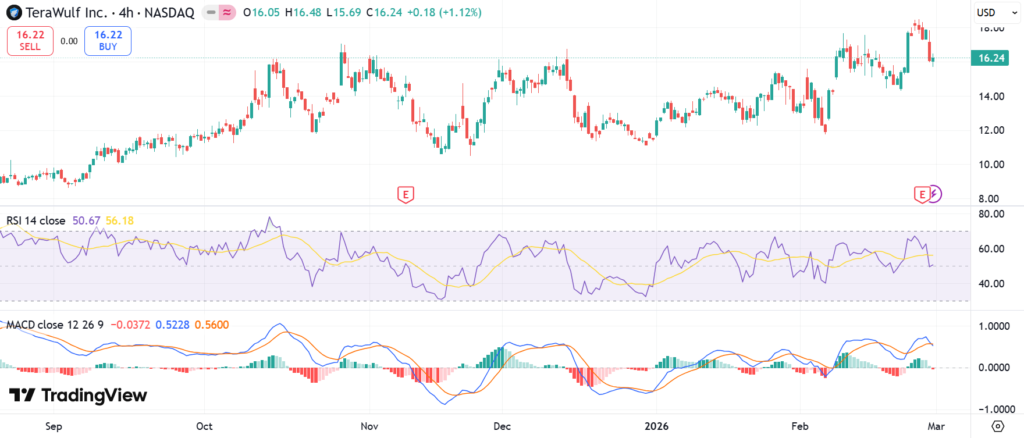
The Relative Strength Index (RSI) for WULF has recently moved from overbought territory into a more neutral zone, signaling that the fastest‑moving speculative buyers have likely locked in some profits. RSI is a momentum indicator that helps flag whether a stock is overbought (risk of pullback) or oversold (possible bounce).
The MACD (Moving Average Convergence Divergence) lines have crossed into a slightly bearish configuration on the short‑term chart, matching the recent pullback. MACD compares fast and slow moving averages of price; a bearish crossover suggests cooling upside momentum, though not necessarily a full‑scale downtrend if the broader trend remains up.
WULF’s 50‑day moving average has crossed above its 200‑day line, forming a golden cross, a classic bullish signal that indicates the stock is trading in a stronger uptrend. Trading volume has spiked during rallies near 18.00, showing active participation from both institutional and retail flows, which can support stronger moves if the trend stays constructive.
Analyst Ratings & Price Targets
Analyst coverage for WULF stock leans strongly positive. As of late February 2026, around 13–14 analysts follow the stock, with most rating it “Buy” or “Strong Buy” and only a small minority at “Hold” or “Sell.” The average 12‑month price target hovers near 16.50–17.50 per share, implying low‑single‑digit upside or small downside from recent levels, depending on which provider you check.
The lowest current target is about 4.00, while the highest runs into the low‑20s, with a few long‑term forecasts as high as 25 or more. These wide ranges reflect the high uncertainty around crypto prices, power costs, and AI‑HPC demand, but the consensus still points to WULF as a growth‑oriented name worth owning for investors comfortable with volatility.
Insider Activity
Insider activity in WULF stock over the past year shows both buying and selling, with notable transactions by top executives and directors. In total, insiders have purchased more than 32 million shares and sold roughly 19–20 million in the last 100 reported trades, indicating a net positive insider stance over that period.
Chief executive Paul Prager and several board members have alternated between selling and buying their own shares, including recent sales of several hundred thousand shares at prices above 15, while also buying blocks of several hundred thousand shares at lower levels. This pattern suggests management is using stock‑based compensation to diversify personal portfolios but is also willing to add shares when the price dips, which many investors interpret as a sign of underlying confidence in the long‑term story.
Valuation Analysis
WULF stock is currently unprofitable on a trailing‑basis, with a negative trailing price‑to‑earnings (P/E) ratio due to net losses. This means classic “value” metrics like P/E are not useful; instead, investors focus on price‑to‑sales and forward‑HPC‑revenue multiples.
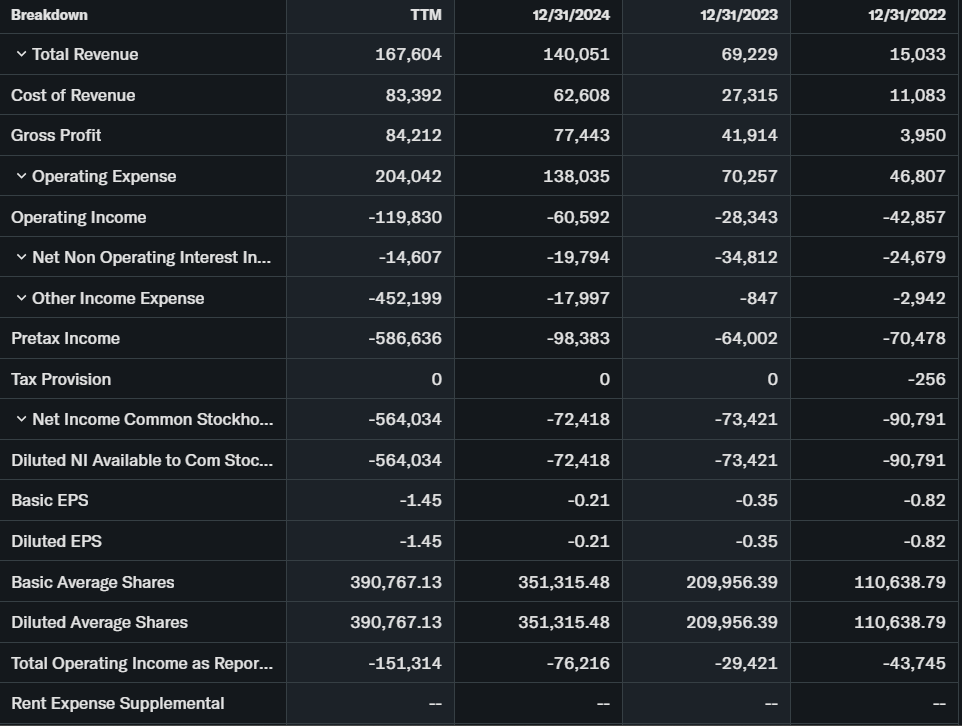
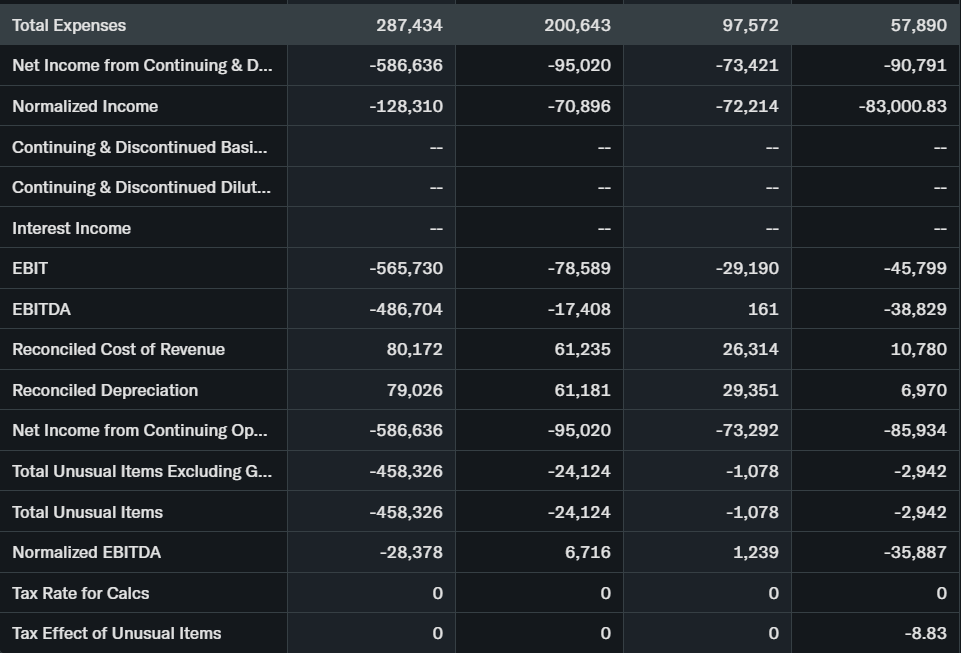
Trailing revenue is about 167–170 million dollars over the past 12 months, up roughly 30–35 percent from the prior year, while net income is deeply negative, in the hundreds of millions of dollars. Forward price‑to‑sales ratios float in the high‑teens, with some estimates around 18–19 times next‑12‑months revenue, which is rich versus most traditional software or industrial names but not unusual for a high‑growth, AI‑exposed data‑center operator.
Free cash flow is still negative as the company scales, while the balance sheet carries a large convertible‑debt package and a rich market capitalization of roughly 6.5–7.5 billion dollars. Compared with peers such as other AI‑infrastructure or crypto‑mining names, WULF looks more expensive on a pure‑FCF basis but attracts a premium because of its long‑term contracted HPC deals and low‑carbon positioning. On this mix of metrics, WULF appears to traders as a growth‑oriented, fairly‑to‑richly valued name rather than a deep‑value opportunity.
Recent WULF Earnings & Catalysts
In its latest reported quarter, WULF posted rapid revenue growth, with year‑over‑year increases in the mid‑80‑percent range, driven by bitcoin mining and emerging HPC contracts. However, earnings per share were still negative, and the company missed or came in just shy of some EPS expectations, which contributed to post‑earnings volatility in the WULF stock price.
Forward guidance highlighted the company’s pivot from pure bitcoin mining toward AI‑related, high‑performance computing, including multi‑billion‑dollar, multi‑year HPC contracts with partners such as Fluidstack. These deals lock in long‑term demand for data‑center capacity and help stabilize future cash flows, even as bitcoin‑related revenue remains more cyclical.
Key upcoming catalysts for WULF stock include:
Further progress on its 2.8‑gigawatt data‑center platform, with 250–500 megawatts of incremental capacity targeted annually.
Execution on its 9.0–9.5 billion‑dollar HPC contract backlog and joint‑venture financing structures.
Continued convertible‑note conversions and capital‑structure simplification, which can reduce interest‑rate and dilution risk over time.
Bullish Case for WULF Stock
The bullish case for WULF stock centers on its exposure to two powerful trends: AI‑driven high‑performance computing demand and scarce, low‑carbon power for data centers. TeraWulf has secured large, long‑term HPC contracts that convert kilowatts into contracted, multi‑year revenue, which can de‑risk the business versus pure, volume‑based bitcoin mining.
Operational improvements include expanding its data‑center footprint, negotiating favorable power‑supply agreements, and refinancing its balance sheet with long‑term convertible notes. These moves can lower unit costs, improve margins, and support higher utilization rates as AI workloads ramp up. For investors comfortable with volatility, WULF offers a leveraged play on the AI‑infrastructure build‑out without the direct risk of owning a traditional cloud‑hyperscaler.
Bearish Case for WULF Stock
On the downside, WULF stock faces several credible risks. Bitcoin prices remain highly volatile, and any sustained crypto bear market would pressure WULF’s mining revenue and free‑cash‑flow profile. Even as HPC grows, the company still reports net losses and negative free cash flow, exposing it to refinancing risk if credit markets tighten.
Competitive pressures are rising, with other miners and data‑center operators aggressively expanding power capacity and AI‑focused infrastructure. If margins compress or if WULF cannot fill its additional capacity at attractive rates, the rich valuation multiples could contract sharply.
Regulatory and environmental concerns around energy‑intensive data centers could also trigger policy changes or higher compliance costs, while macroeconomic slowdowns could delay AI‑investment cycles and reduce demand for new compute capacity.
Market Sentiment & Investor Psychology
Market sentiment toward WULF stock is mixed but tilted toward optimism among long‑term investors. Options activity shows elevated call volume near higher strike prices, reflecting a bias toward upside if AI and HPC demand stay strong. Institutional ownership has increased as hedge funds and long‑term funds add positions tied to the AI‑infrastructure thesis, while short‑interest data remain modest compared with many other high‑beta tech names.
Retail investors are attracted by the stock’s explosive 52‑week move, which has more than tripled from its 2025 low, but recent pullbacks have triggered fear‑based selling in some segments of the market. Overall sentiment leans optimistic for the long term, with a cautious, short‑term view as investors wait for clearer proof that HPC margins can offset bitcoin‑related volatility.
Short‑Term Outlook for WULF Stock
In the short term, WULF stock looks likely to trade in a choppy, range‑bound pattern as it consolidates from its recent high near 18.00. Technicals suggest support near 14.00–15.00 and resistance near 17.50–18.00, with the golden cross and strong trend backdrop favoring rallies if bitcoin and AI sentiment stay positive.
However, any sharp drop in crypto prices, hawkish Fed commentary, or negative power‑cost news could trigger another leg lower into the lower‑support zone. Traders should expect continued volatility, with price direction heavily influenced by macro‑risk‑on sentiment rather than pure fundamentals in the next few weeks.
Medium‑ to Long‑Term Outlook
Over the next 6–24 months, WULF stock’s fate will depend on three factors: execution on HPC contracts, management of bitcoin‑related volatility, and the ability to improve margins and cash flow. The business model is strong if TeraWulf can turn its 2.8‑gigawatt platform into stable, high‑margin compute revenue, supported by its low‑carbon, power‑advantaged sites.
Competition is fierce, but the company’s strategic partnerships and long‑term deals give it a structural edge versus pure‑play miners. Financially, the balance sheet is stretched but manageable so long as convertible‑note structures and project financing keep dilution and interest costs under control.
For long‑term investors, WULF may be worth holding or selectively accumulating on dips, provided they accept the risk of sharp drawdowns linked to crypto cycles and power‑market news.
FAQ: WULF Stock
Is WULF stock a buy right now?
Analyst consensus leans toward “Buy” or “Strong Buy,” but WULF is richly valued and highly volatile. It may suit investors with a high‑risk tolerance and a multi‑year time horizon, rather than those seeking low‑volatility exposure.
What is the price target for WULF stock?
Current 12‑month price targets cluster around 16.50–17.50 on average, with a wider range from roughly 4.00 to the low‑20s. These targets imply modest upside or downside from recent levels, depending on the firm and its assumptions about AI and crypto demand.
What are major risks for WULF stock?
Key risks include bitcoin‑price volatility, negative free cash flow, competitive pressure, execution risk on HPC contracts, and potential regulatory or macroeconomic headwinds that could slow AI‑infrastructure spending.
Suggestions
Compare with Dell stock
See our AI data‑center stock forecast
Read our crypto‑mining sector valuation breakdown
Final Balanced Conclusion
WULF stock is a compelling high‑growth name tied to AI computing and low‑carbon data centers, but it trades at a rich valuation and carries significant volatility and execution risk. For many investors, a “Hold” or “Watchlist” stance with occasional accumulation on dips is more balanced than an outright all‑in “Buy.” This approach lets you stay exposed to the AI‑HPC thesis while respecting the risks inherent in early‑stage infrastructure investing.
Disclaimer: This article is for informational purposes only and not financial advice.