

Explore ORCL stock analysis with latest price trends, Q3 earnings beat, technical indicators, and 2026 forecast. Is ORCL stock a buy now? Get insights on valuation and outlook.
Introduction
Oracle Corporation builds cloud software and databases for businesses worldwide. ORCL stock draws attention after a strong Q3 fiscal 2026 earnings report that beat expectations. Tech stocks face pressure from market volatility, but Oracle’s AI cloud growth stands out.
Broader market dips affect tech, yet Oracle shows resilience amid AI demand.
Latest Stock Price & Trend
ORCL stock closed at $149 on March 10, 2026, per last market data from Yahoo Finance and CNBC. It jumped up to 10% in after-hours trading post-earnings, signaling quick investor reaction.
The 1-day performance showed volatility with a late surge. Over 5 days, shares dipped slightly amid broader tech weakness. In the past month, ORCL stock fell as AI hype cooled.
Three-month trend points bearish, down over 20% from September highs. Six-month performance weakened further, reflecting debt concerns. Year-to-date in 2026, ORCL stock dropped 23%, lagging the S&P 500’s minor decline.
The 52-week high hit $345.72, while the low sits near $149 recently. Overall trend looks bearish short-term but hints at reversal after earnings. Investors see this as a potential bottoming signal for entry points.
Technical Analysis
Support levels hover at $145, a recent low where buyers stepped in. Resistance sits at $161, the pre-earnings level; breaking it could spark rallies.

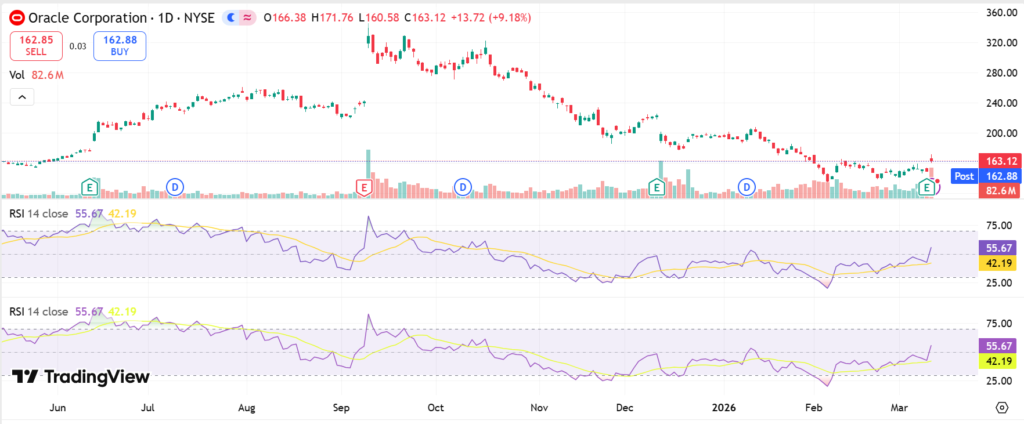
RSI reading nears 35, indicating oversold conditions—buyers may soon dominate as it rebounds from extremes. MACD shows a bullish crossover, with the line above signal, suggesting upward momentum building.
The 50-day moving average at $170 tops the 200-day at $210, no golden cross yet but narrowing gap hints at one soon. Trading volume spiked post-earnings, up sharply from averages, confirming genuine interest.
These indicators matter as they flag entry risks or rewards for beginners. Oversold RSI and volume surge point to short-term bounce potential in ORCL technical analysis.
Analyst Ratings & Price Targets
Analysts lean positive on ORCL stock. Of 32 recent reports, most rate Buy or Overweight, with few Holds and no Sells.
Average price target lands at $210, with highs near $230 and lows at $180. JP Morgan upgraded to Overweight on March 11, trimming target to $210 from $230.
Wall Street firms like Evercore praise Oracle’s hyperscaler status. This sentiment boosts confidence, as upgrades signal growth faith for everyday investors tracking ORCL forecast.
Insider Activity
Oracle insiders showed mixed signals recently. CEO Safra Catz led selling with $2.5 billion in shares, part of planned transactions.
No major recent buying noted, but selling aligns with high stock prices earlier. Large sales by executives imply profit-taking, not panic.
Trends suggest caution amid valuation worries, yet long-term holdings remain strong. This activity warrants watchfulness rather than alarm for ORCL stock investors.
Valuation Analysis
ORCL stock trades at a trailing P/E of about 38, forward P/E near 25. Price-to-sales ratio stands at 8.5, reflecting cloud premium.

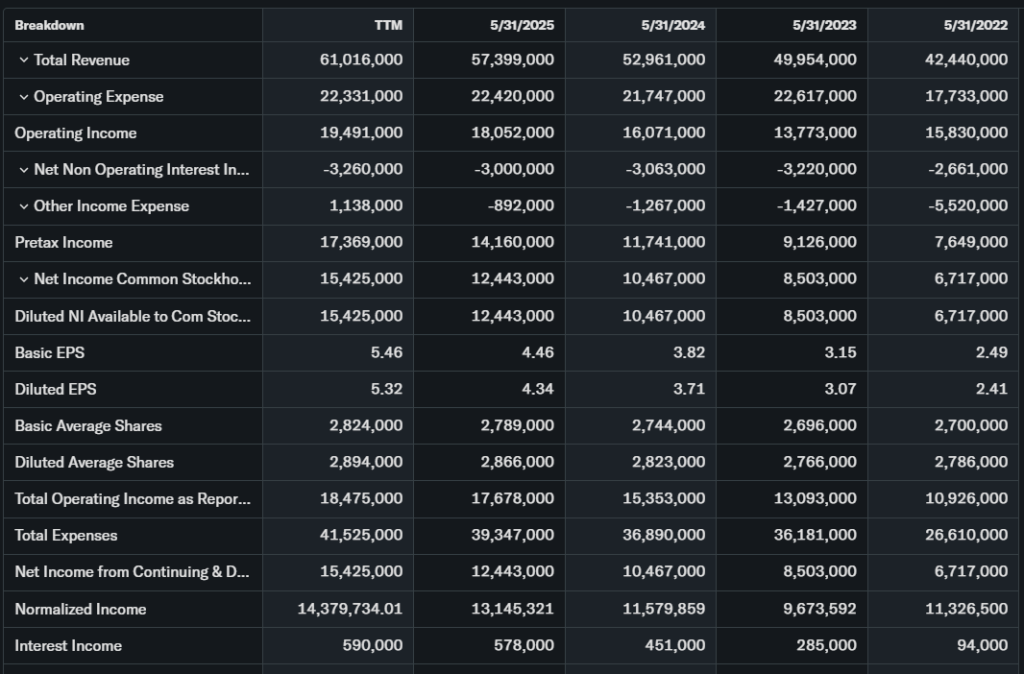

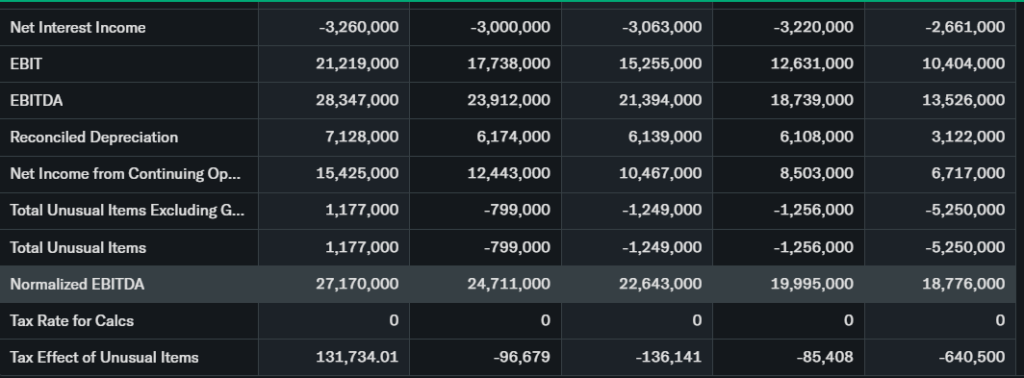
Revenue grew 22% YoY to $17.2 billion in Q3 FY2026. EPS rose 24% to $1.27 GAAP, non-GAAP at $1.79 up 21%.
Free cash flow turned negative at -$13.18 billion TTM due to AI data center spends, but operating cash flow hit $23.5 billion. Debt is high from expansions, cash position solid at billions.
Compared to Microsoft (forward P/E 32) or Zoom (lower growth), ORCL appears fairly valued for its 20%+ growth. It leans neither cheap nor pricey.
Recent Earnings & Catalysts
Q3 FY2026 results shone: revenue $17.2 billion beat estimates, up 22% YoY. Cloud revenue climbed 44%, infrastructure up 84% to $4.9 billion.
EPS topped forecasts at $1.27 GAAP vs expected lower. Guidance raised for FY2027 revenue growth to 19-20%, EPS $1.92-$1.96.
Catalysts include OpenAI deals, Stargate project, and partnerships with Microsoft, Lockheed. Earnings drove the 10% stock pop, easing AI debt fears in ORCL earnings review.
Bullish Case
Oracle’s remaining performance obligations hit $553 billion, up 325% YoY, locking in future revenue.
Cloud demand surges with AI hyperscaler status. Tech edges like multi-cloud integrations fuel growth.
Operational wins, such as 84% infrastructure jump, position Oracle for sustained 20% revenue gains.
Bearish Case
Competition from AWS, Azure intensifies margin pressure. High debt from AI builds raises liquidity risks vs peers.
Slowing license growth and negative free cash flow worry watchers. Economic slowdowns could hit enterprise spending.
Regulatory scrutiny on AI data centers adds uncertainty.
Market Sentiment & Investor Psychology
Short interest remains moderate at under 2%. Options show call buying post-earnings, outpacing puts.
Institutions hold steady, up slightly. Retail chases momentum dips.
Sentiment shifts optimistic after Q3, from fearful to neutral-positive on ORCL stock price recovery hopes.
Short-Term Outlook
Technical oversold RSI and MACD bullish signal near-term bounce. Volume confirms momentum.
Earnings tailwind and market rotation to value support gains next days/weeks. Watch resistance at $161.
Medium to Long-Term Outlook
Oracle’s cloud pivot strengthens its model in a growing AI industry. Competitive AI deals offset risks.
Financials improve with RPO backlog. Long-term investors should hold or accumulate on dips.
FAQ Section
Is ORCL stock a buy right now?
Yes for growth seekers, given earnings beat and cloud momentum, but watch debt.
What is the ORCL stock price target?
Average $210, with Overweight upgrades signaling upside.
What are major risks for ORCL stock?
High debt, competition, free cash flow negativity.
ORCL forecast for 2026?
Positive on 19-20% revenue growth guidance.
ORCL technical analysis summary?
Oversold RSI, bullish MACD favor rebound.
Suggestions
- Compare with Opendoor stock analysis
- See our Microsoft stock forecast
- Read our tech sector valuation breakdown
Conclusion
Hold ORCL stock for now. Earnings strength and AI catalysts support recovery, balanced by debt risks—watch for technical breakout.
Disclaimer: This article is for informational purposes only and not financial advice.