Nvidia (NVDA) stock analysis with price trends, earnings, valuation, technicals, and forecast to help investors decide if NVDA stock is a buy.
Introduction
Nvidia is a leading chipmaker that designs graphics processors and AI accelerators used in data centers, gaming PCs, autonomous vehicles, and edge devices. Investors focus on Nvidia stock because it sits at the center of the artificial intelligence hardware boom, supplying GPUs and networking gear to major cloud and enterprise customers. The broader tech sector has been driven by AI, but rich valuations and interest-rate uncertainty keep volatility elevated for high-growth names like Nvidia.
Nvidia stock attracts both long-term growth investors and short-term traders, who track Nvidia stock price swings around earnings, product launches, and macro news. Nvidia earnings have repeatedly beaten expectations, reinforcing interest in whether Nvidia stock is a buy or due for a pause.
Latest Stock Price & Trend
Nvidia stock (NVDA) last closed around the mid-180s to low-190s per share on the Nasdaq, giving the company a market capitalization in the multi-trillion-dollar range. On the most recent trading day, Nvidia stock price slipped modestly by roughly half a percent, showing a normal consolidation move after a strong multi-month rally. Over the last 5 days, the price has been choppy but slightly positive, reflecting mixed short-term sentiment as traders digest the latest Nvidia earnings and guidance.
On a 1‑month basis, NVDA remains in an uptrend, posting solid gains as investors reward strong revenue and profit growth from AI data center demand. Over the past 3 months, Nvidia stock has moved higher with some pullbacks, but overall direction has stayed bullish as the company continues to post record quarterly results. Over a 6‑month window and year‑to‑date, NVDA has delivered large double‑digit gains and has outperformed the broader U.S. market, though it has been roughly in line with or slightly below the broader semiconductor group over the last year.
Nvidia’s 52‑week range shows a wide gap between its low and high, underlining how powerful the AI rally has been and how much expectations have risen. With the stock trading closer to the upper end of that 52‑week band than the low, the overall trend direction for Nvidia stock remains bullish, even if daily moves can be noisy. For investors, this means momentum is still positive, but entry points matter because valuations already price in very strong Nvidia forecast growth.
Technical Analysis
Nvidia stock technical analysis starts with support and resistance. Support levels are price zones where buyers have recently stepped in, often near prior pullbacks or short-term moving averages, while resistance marks areas where rallies previously stalled. For NVDA, recent support sits around prior consolidation regions below the current price, while resistance clusters near recent 52‑week highs where selling pressure has emerged.
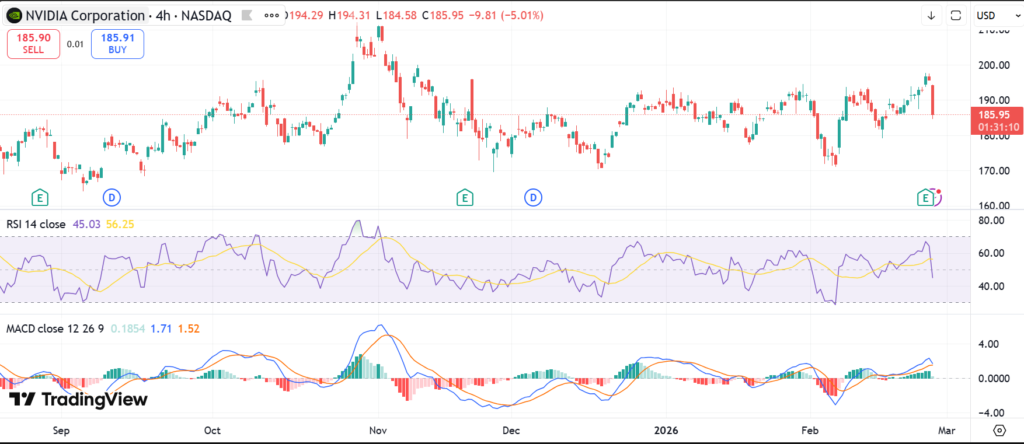
The Relative Strength Index (RSI) measures whether a stock is overbought or oversold on a 0–100 scale; readings above 70 often flag overbought conditions, while below 30 suggests oversold. Nvidia’s RSI has recently spent time in or near the overbought zone after a strong run, signaling stretched short‑term sentiment and the possibility of pullbacks, but not necessarily a long‑term top. The Moving Average Convergence Divergence (MACD), which tracks the relationship between two moving averages, has recently turned positive for NVDA, indicating a bullish shift in momentum after a previous cooling phase.
The 50‑day and 200‑day moving averages smooth price action to show the prevailing trend. Nvidia stock currently trades above both its 50‑day and 200‑day moving averages, which is a classic sign of an ongoing uptrend. When the 50‑day average stays above the 200‑day, technicians call it a “golden cross,” a bullish long‑term signal that suggests strong underlying demand; Nvidia has been in this configuration for some time. Trading volume has also been elevated around earnings and major news, implying strong participation by institutions and traders when the Nvidia stock price makes big moves.
Analyst Ratings & Price Targets
Wall Street remains broadly positive on Nvidia stock. Aggregated analyst data shows a “Strong Buy” consensus rating, with the majority of firms assigning Buy or Strong Buy, a small number rating it Hold, and very few outright Sell ratings. Across dozens of analysts, the average 12‑month Nvidia price target sits well above the current NVDA share price, implying upside potential in the mid‑double‑digit percentage range.
Within that, the highest published price targets for NVDA reach into the mid‑300s and above, while the lowest sit closer to or slightly below the current trading level, reflecting concern about valuation if growth slows. Major Wall Street firms such as Morgan Stanley, Citigroup, Barclays, JPMorgan, Evercore ISI, and others have recently reiterated Buy‑type ratings following Nvidia earnings, often raising their targets on stronger‑than‑expected AI data center demand. Analyst sentiment suggests that professionals still see Nvidia earnings and revenue rising, but they also acknowledge that any stumble in AI spending could hit the stock hard.
Insider Activity
Insider activity in Nvidia stock—trades by executives and directors—offers clues about management confidence. Over the past several months, disclosures have shown more insider selling than buying, which is common for large, mature tech firms where executives receive substantial stock-based compensation. These sales have typically been scheduled under 10b5‑1 trading plans rather than abrupt, one‑off transactions, suggesting routine diversification rather than a sudden loss of confidence.
Recent insider buying, if present, has been limited and small relative to Nvidia’s vast market value, so insider activity overall leans neutral to slightly cautious rather than strongly bullish. For investors, this pattern usually means insiders are monetizing part of their gains in a high‑valuation environment instead of signaling a negative view on Nvidia’s long‑term outlook.
Valuation Analysis
On traditional valuation metrics, Nvidia stock screens as expensive compared with the broader market and even many large tech peers. NVDA trades at a trailing price‑to‑earnings (P/E) ratio near the high‑30s to upper‑40s range, and a forward P/E in the mid‑20s based on consensus earnings estimates. Its price‑to‑sales ratio in the mid‑20s underscores how much investors are willing to pay for each dollar of Nvidia revenue, far above typical large-cap benchmarks.
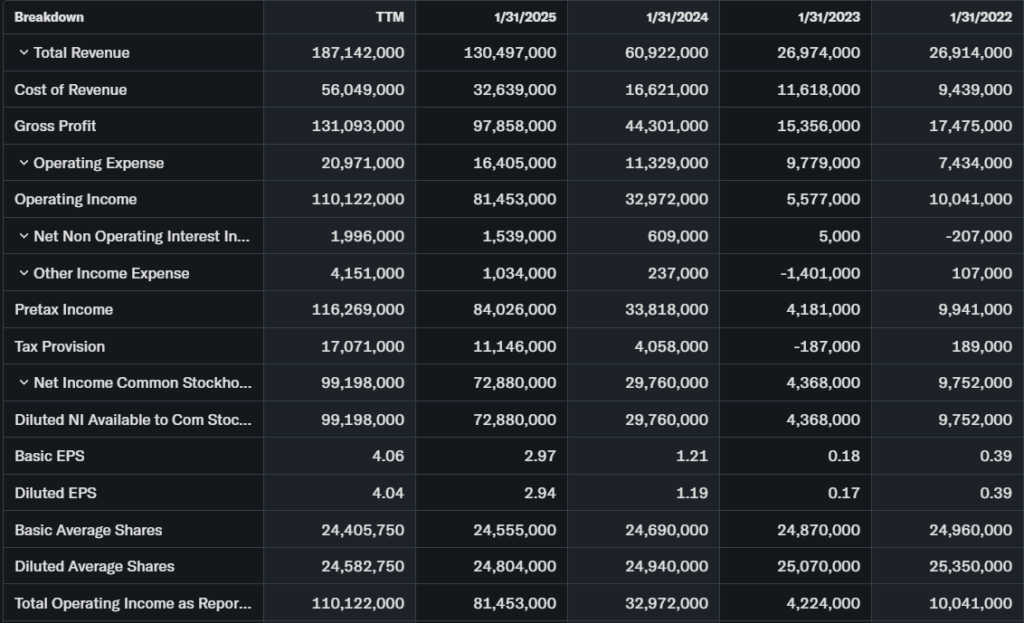
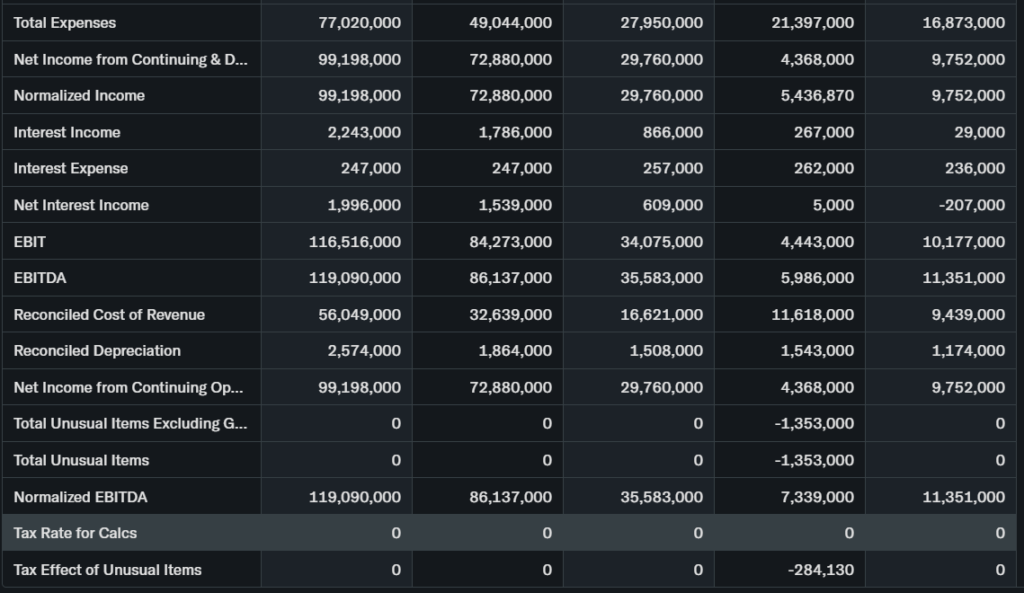
However, unusually strong growth partially explains these premiums. Nvidia’s margins are exceptional, with gross margin near or above 70% and profit margins above 50%, reflecting the high value of its AI chips and software stack. Recent Nvidia earnings show revenue growth of more than 60% year‑over‑year in key quarters, while net income has risen even faster thanks to operating leverage. The company also generates very strong free cash flow and maintains a solid balance sheet, with large cash reserves and manageable debt relative to its cash generation capacity.
Compared with mega-cap peers like Microsoft, which trades at lower P/E and price‑to‑sales multiples, Nvidia stock appears richly valued but backed by much faster near‑term revenue and EPS growth. Relative to many semiconductor peers, NVDA also trades at a premium, yet its AI leadership, margins, and returns on capital—ROE above 100% and ROIC north of 150%—help justify some of that markup. Overall, Nvidia stock looks closer to fully valued to overvalued on classic metrics, but still attractive if the company can sustain elevated growth for several more years.
Recent Earnings & Catalysts
In its latest reported quarter, Nvidia delivered record results. For the most recent fiscal quarter, the company posted revenue above 60 billion dollars, up roughly 70% year‑over‑year, driven primarily by AI data center demand and networking products. Net income soared by more than 90% year‑over‑year, with net profit surpassing 40 billion dollars as gross margin climbed above 75%. These Nvidia earnings comfortably beat Wall Street expectations for both revenue and EPS, and management issued upbeat guidance for the next quarter.
Major catalysts include ongoing launches of next‑generation AI GPUs and systems, expanding partnerships with cloud hyperscalers, and broader adoption of Nvidia’s CUDA and software ecosystem. The company has also emphasized AI platforms that integrate compute, networking, and software, which can deepen customer lock‑in and support recurring revenue streams. Market reaction to the latest Nvidia earnings was positive, with the stock initially jumping in after‑hours trading before moderating as investors weighed valuation against the strong numbers.
Bullish Case
The bullish case for Nvidia stock rests on several realistic drivers. First, demand for AI compute remains extremely strong as cloud providers, enterprises, and governments invest in large language models, recommendation engines, and accelerated workloads. Nvidia’s leading GPU architectures, high‑speed networking products, and software stack give it a technology edge that competitors have struggled to close.
Second, Nvidia’s business is diversifying beyond core GPUs. Data center AI, automotive, edge AI, and software and services all offer additional revenue streams, potentially smoothing cyclicality over time. Third, Nvidia’s high margins and strong free cash flow could support shareholder returns through buybacks and dividends over the long run, while still funding heavy R&D and capital investments.
Bearish Case
On the downside, Nvidia stock faces meaningful risks. Competition is intensifying, with rivals and large customers developing their own AI accelerators and specialized chips, which could pressure Nvidia’s pricing power over time. The current growth surge depends heavily on hyperscaler and large enterprise spending; any slowdown in AI infrastructure investment could lead to growth deceleration or temporary revenue contractions.
Regulatory and geopolitical risks also loom. Export controls on advanced chips to certain countries, especially China, could limit parts of Nvidia’s addressable market or require product changes. Furthermore, the stock’s elevated valuation leaves limited margin for error; even modest disappointments in Nvidia earnings or guidance could trigger sharp corrections. Finally, AI demand could normalize if returns on AI investments lag expectations, leading investors to reassess long‑term growth assumptions.
Market Sentiment & Investor Psychology
Market sentiment around Nvidia stock is generally optimistic but increasingly cautious. Short interest as a percentage of float remains relatively low, reflecting that most investors are not betting heavily against NVDA despite its high valuation. Options activity often skews toward calls around earnings and major AI events, showing strong speculative interest in upside moves, but put activity rises when macro conditions worsen or the stock appears overbought.
Institutional ownership is high, with large asset managers and mutual funds holding significant stakes, signaling confidence in Nvidia’s long‑term story. Retail investors also remain heavily involved, frequently trading Nvidia stock price moves intraday and around headlines, which can amplify volatility. Overall sentiment is best described as optimistic, tilted toward momentum and growth rather than value, with many investors willing to pay up for Nvidia forecast growth but aware that expectations are demanding.
Short-Term Outlook
In the near term, Nvidia stock will likely trade around key technical levels and news catalysts. With NVDA above its main moving averages and a positive MACD signal, the technical backdrop leans supportive of the uptrend, though recent overbought RSI readings suggest that pullbacks or sideways consolidation are possible. Trading volume spikes around earnings and macro data could drive sharp swings both up and down.
For the next several days to weeks, a realistic expectation is for choppy trading within a range, with dips toward support attracting buyers who believe Nvidia stock is a buy on weakness, and rallies toward recent highs meeting some profit‑taking. Short‑term traders should watch support, resistance, RSI, and volume closely rather than focusing on long‑term Nvidia forecast scenarios.
Medium to Long-Term Outlook
Over the next 6–24 months, Nvidia’s outlook depends mainly on sustaining AI‑driven growth and defending its competitive position. The company’s business model—selling high‑performance chips, systems, and software for AI and acceleration—targets a market that is expected to grow rapidly as AI workloads expand across industries. Nvidia’s ecosystem strength, including CUDA, libraries, and developer tools, remains a key moat that helps differentiate it from rivals.
Financially, Nvidia’s strong margins, cash generation, and high returns on capital put it in an excellent position to invest in next‑generation technologies while weathering potential downturns. However, valuation risk, competition, and regulatory uncertainties mean returns may be bumpier than in the past few years. For long‑term investors, Nvidia stock looks suitable as a core growth holding or accumulate on pullbacks, rather than an all‑in bet at any price.
FAQ Section
- Is Nvidia stock a buy right now?
Nvidia stock is widely rated a Buy or Strong Buy by analysts, supported by powerful AI‑driven growth and exceptional profitability, but its valuation is demanding, so investors should consider risk tolerance and time horizon. - What is the price target for Nvidia stock?
The average 12‑month Nvidia price target from Wall Street analysts sits well above the current Nvidia stock price, with high-end targets reaching into the mid‑300s or higher and low-end targets closer to present levels. - What are major risks for Nvidia stock?
Key risks include competition from rival chips and in‑house accelerators, potential slowdowns in AI infrastructure spending, export restrictions, and the possibility that high expectations embedded in Nvidia valuation prove too optimistic. - How fast is Nvidia revenue growing?
Recent Nvidia earnings show revenue growth running above 60% year‑over‑year in key quarters, driven mainly by AI data center and networking demand. - What is Nvidia’s long-term outlook?
Nvidia’s long‑term outlook remains attractive given AI adoption, its technology lead, and strong financials, but returns will depend on how long the current growth surge lasts and how effectively it navigates competition and regulation.
Suggestions
You could link this article to related content such as:
“Compare with Opendoor stock” for investors looking at other high-growth tech names.
“See our Microsoft stock forecast” to contrast Nvidia with a diversified software and cloud leader.
“Read our tech sector valuation breakdown” for context on how Nvidia valuation fits within broader tech.
Final Balanced Conclusion
Nvidia stock sits at the heart of the AI revolution, delivering extraordinary growth, high margins, and strong free cash flow that few companies can match. At the same time, Nvidia valuation already discounts a very optimistic Nvidia forecast, and the stock is sensitive to any slowdown in AI spending or negative surprises.
Overall, NVDA currently fits best as a Buy for long-term growth investors on pullbacks or a Hold for existing shareholders, while more conservative investors might keep it on a watchlist and wait for better entry points. Nvidia stock remains a powerful growth story, but one that requires comfort with volatility and elevated expectations.
Disclaimer: This article is for informational purposes only and not financial advice.