
NVIDIA (NVDA) stock analysis: price, earnings, valuation, and forecast. Is NVDA stock a buy in 2026? Includes technicals, ratings, and risks.
Introduction
NVIDIA (ticker: NVDA) designs the advanced graphics chips and artificial‑intelligence “GPUs” that power everything from video games and professional design tools to cloud‑scale AI factories and data‑center infrastructure. In simple terms, NVDA stock is essentially a bet on how quickly and widely the world adopts AI‑driven computing.
Investors are intensely focused on NVDA stock because it has become the single most visible winner of the AI boom, with enormous revenue growth and a massive market valuation. At the same time, broader tech‑sector sentiment is sensitive to interest‑rate moves, data‑center spending cycles, and geopolitical shifts in semiconductor supply chains, all of which can influence how the market prices NVDA stock price in the near term.
Latest NVDA Stock Price & Trend
As of the last market close, NVDA stock trades around $177–$180 per share, with a market capitalization near $4.3–4.4 trillion, making it one of the largest companies in the world by value. Over the past 24 hours, NVDA stock delivered a modest gain of roughly 0.8–1.0%, reflecting a modest rebound after a recent pullback.
Looking at the last five days, NVDA stock has oscillated between slight gains and losses, illustrating short‑term volatility rather than a sharp new trend. Over the past month, NVDA stock price has moved mostly sideways or slightly lower, down a small percentage from recent highs, while the 3‑month trend still shows a solid positive move, albeit well off its peak.
The 6‑month performance remains strongly positive, and NVDA stock is up double‑digit percentage year‑to‑date, underscoring that the AI‑driven rally is still intact but has cooled from its earlier vertical run. NVDA’s 52‑week high is about $212, with a 52‑week low near $86–87, indicating a very wide trading range driven by shifting expectations around AI demand.
Overall, the trend direction is consolidating‑bullish: NVDA stock is still trading at a high level versus a year ago, but the pace has slowed from its parabolic phase, signaling that investors are reassessing growth sustainability and valuation.
Technical Analysis
Support and resistance levels help define where traders expect NVDA stock price to pause or reverse. For NVDA, recent support zones cluster roughly in the $160–170 range, where increased buying interest has appeared in prior pullbacks. Resistance sits higher, near $190–200, an area where earlier profit‑taking and short‑term selling pressure have emerged.
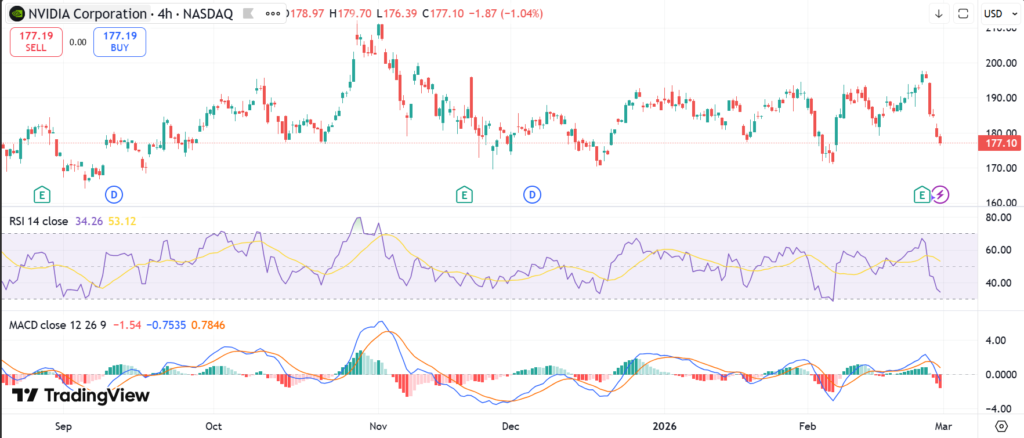
The Relative Strength Index (RSI) for NVDA is currently in the mid‑30s, which is considered neutral to slightly oversold; it suggests that NVDA stock is not overbought and may have room to bounce if positive news or AI‑capex optimism returns. A reading below 30 typically signals oversold, while above 70 is overbought; being in the mid‑30s means momentum is weak but not yet oversold.
The Moving Average Convergence Divergence (MACD) shows the MACD line slightly below its signal line, which is a mild bearish momentum signal in the short term. However, the 50‑day moving average still sits above the 200‑day moving average, preserving a “golden cross” structure that long‑term trend followers interpret as a bullish backdrop.
Trading volume for NVDA has been elevated but declining from recent spikes, implying that the frenzied AI‑fueled buying wave has cooled somewhat. High volume on up‑days traditionally supports bullish moves, while high volume on down‑days can signal distribution; at present, NVDA’s volume profile suggests that the stock is in a shake‑out phase rather than a clear capitulation.
Analyst Ratings & Price Targets
Approximately 47–53 analysts currently cover NVDA stock, with the vast majority leaning bullish. Recent tallies show a mix of “Strong Buy” and “Buy” ratings as the consensus, with only a small handful of “Hold” and “Strong Sell” calls.
The average NVDA price target clusters around $255–265 per share, implying a low‑to‑mid‑30% upside from current levels if the stock advances to that midpoint. Targets range from a floor near $140 on the bearish side to a ceiling around $380–430, reflecting both deep‑value skeptics and aggressive AI‑growth optimists.
Several major Wall Street firms recently reiterated “Buy” or “Strong Buy” ratings on NVDA stock, citing continued strength in data‑center and AI‑related revenue despite near‑term valuation concerns. A few notes have downgraded or highlighted risks around stretched multiples and potential AI‑capex cycles, but the overall sentiment remains bullish, signaling that professional analysts still see NVDA as a high‑growth compounder rather than a pure speculation.
Insider Activity
Recent insider filings show that executive selling has exceeded buying, which is not unusual for a company whose stock has surged so rapidly. Large transactions often involve pre‑arranged 10b5‑1 plans designed to diversify concentrated holdings, rather than a signal of imminent trouble.
There is no widespread pattern of unusual insider buying at current levels, which can be read as a cautious stance from management amid record valuations. That said, there are also no major red‑flag resignations or wave‑like exits; most leadership activity reflects routine portfolio management rather than panic.
For investors, the takeaway is nuanced: NVDA insiders are not aggressively accumulating shares, which tempers enthusiasm, but they are not signaling a fundamental collapse either. This profile fits a cautiously confident management team that is taking some chips off the table while still remaining heavily invested in the long‑term story.
Valuation Analysis
At current levels, NVDA stock trades at a trailing price‑to‑earnings (P/E) ratio near 36–37 times, which is rich by traditional large‑cap standards but in line with a high‑growth AI leader. The forward P/E, based on expected earnings over the next 12 months, is lower but still in the mid‑20s to low‑30s, reflecting continued rapid profit growth expectations.
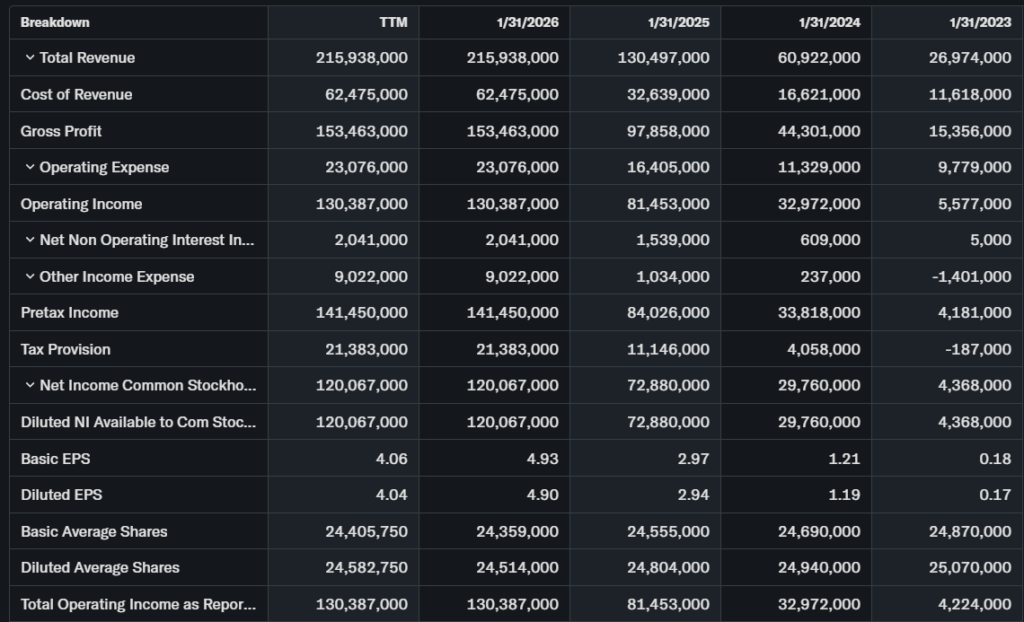
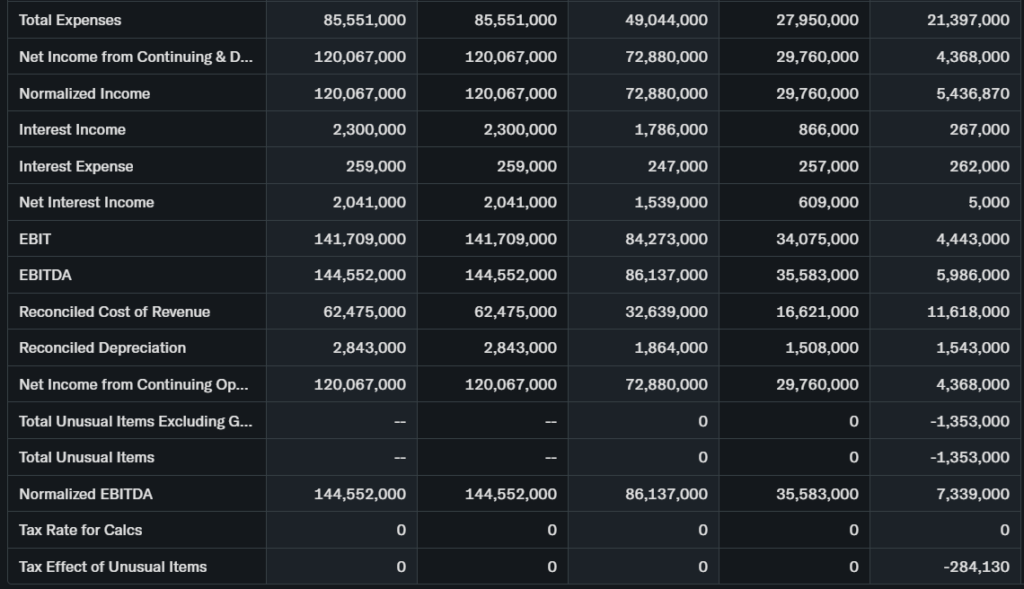
NVDA’s price‑to‑sales (P/S) ratio sits in the mid‑10s, reflecting the market’s willingness to pay a premium for its AI‑driven revenue growth. Revenue growth for the trailing 12 months has been in the 60–65% year‑over‑year range, while earnings per share growth has lined up similarly, thanks to strong gross margins hovering around low‑70%.
Free cash flow is robust, with billions of dollars generated annually, and the company maintains a strong net cash position after accounting for debt. Comparing NVDA stock to peers such as Broadcom and other large‑cap AI‑adjacent names, NVDA’s valuation is clearly more expensive on a P/E and P/S basis, but it also exhibits faster revenue and earnings growth, justifying some of the premium.
Putting it together, NVDA stock looks fairly valued to slightly overvalued for a business‑risk‑averse investor, but reasonable for a growth‑oriented investor who believes AI‑driven data‑center and GPU demand will persist for several years.
Recent Earnings & Catalysts
In its latest quarterly results (for the quarter ended January 25, 2026), NVIDIA reported record revenue of about $68.1 billion, up roughly 20% sequentially and about 70% year‑over‑year. That brought full‑fiscal‑year 2026 revenue to around $216 billion, reflecting explosive growth driven by AI‑related data‑center sales.
Earnings per share (non‑GAAP) were strong, with diluted EPS near $4.75–4.90 for the year, up more than 60% year‑over‑year, while gross margins remained above 70%, highlighting pricing power and manufacturing efficiency. The company beat both revenue and EPS expectations, but the stock initially wobbled on concerns about slowing growth and valuation rather than weak fundamentals.
Forward guidance emphasized continued AI‑related demand, with management highlighting strength in cloud‑hyperscaler orders, sovereign‑AI projects, and AI infrastructure investments from partners like Microsoft, Amazon, and OpenAI. Recent announcements of joint investments in AI infrastructure, including a $110 billion OpenAI‑backed round that includes Nvidia, Amazon, and SoftBank, reinforce NVDA’s role as a core building block of the AI ecosystem.
These catalysts have helped sustain NVDA stock price despite short‑term volatility, reminding investors that the AI build‑out is still in relatively early innings.
Bullish Case
NVDA stock benefits from several durable, realistic growth drivers. Demand for AI training and inference chips in data centers is expected to keep rising as more companies adopt large‑language models and real‑time AI services. Cloud‑hyperscalers such as Amazon, Microsoft, and Google are all planning multi‑billion‑dollar AI‑capex cycles, which directly translate into GPU orders for NVIDIA.
NVDA’s technology lead in GPU architecture, software tools, and AI frameworks creates a network‑effect advantage: once customers build models on NVIDIA’s stack, the cost of switching to a rival becomes high. This “stickiness” can help maintain strong margins and pricing power over time, even as competition grows.
Operational improvements and scale also matter. NVIDIA’s ability to push gross margins into the low‑70% range while growing revenue rapidly shows strong execution. As the company diversifies into sovereign‑AI deployments, automotive, and industrial‑automation niches, NVDA stock gains additional growth levers beyond pure data‑center demand.
Bearish Case
Despite the optimistic narrative, NVDA stock faces real downside risks. The most obvious is valuation risk: if AI‑capex growth slows or macroeconomic headwinds reduce corporate spending, the stock could re‑rate lower from its elevated multiples.
Competition is intensifying. Rivals such as AMD, Broadcom, and custom‑chip projects from hyperscalers like Meta are investing heavily in alternative AI accelerators, which could pressure NVIDIA’s pricing and market share over time. Even incremental gains by competitors may be enough to unsettle investors who expect NVDA to remain dominant.
Slowing growth, margin pressure from larger scale, customer‑churn concerns, or regulatory scrutiny over AI and semiconductors could also weigh on NVDA stock price. Any signs that the AI‑buildout cycle has peaked—such as a string of soft data‑center capex reports—could trigger a sharp re‑pricing of NVDA shares.
Market Sentiment & Investor Psychology
Short‑interest data indicate that NVDA stock is still heavily shorted, but the percentage of float held short has fluctuated rather than exploded, suggesting that bears are cautious about a sharp squeeze. Options activity remains elevated, with a mix of calls and puts, reflecting active speculation about both upside and downside.
Institutional ownership is high, with many large funds and index investors holding NVDA as a core tech and AI position. Retail investors are also highly engaged, as NVDA’s story is easy to understand and has delivered spectacular returns over the past few years.
Overall sentiment sits somewhere between optimistic and nervous: long‑term investors see NVDA as a crucial AI infrastructure play, while short‑term traders worry about valuation and cyclicality. This mix keeps NVDA stock price volatile near-term but supports it over the long term if the AI thesis holds.
Short‑Term Outlook
In the short term, NVDA stock price is likely to trade in a range around $160–190, with tweaks depending on broader tech‑sector moves, AI‑capex headlines, and macro news. Technical indicators suggest modest bearish momentum near term, so additional choppiness or sideways action is plausible before a clearer directional move emerges.
Volume patterns argue against a full‑blown crash at current levels, but they also do not support a clean, straight‑up breakout. For swing‑oriented investors, NVDA stock may favor buy‑on‑dips near the lower support zone rather than chasing new highs, as long as AI‑demand fundamentals remain intact.
Medium to Long‑Term Outlook
Over the 6–24‑month horizon, NVDA stock depends on whether AI‑driven data‑center and GPU demand grow broadly in line with current expectations. Business‑model strength in semiconductors, software, and systems, combined with a dominant position in AI accelerators, supports the view that NVDA remains a core long‑term holding for many growth portfolios.
However, the stock’s rich valuation leaves limited margin for error if growth disappoints or if regulators or competitors chip away at NVIDIA’s leadership. For long‑term investors, a “hold” or selective accumulation on weakness” stance—rather than an all‑in bet at any price—may be more balanced.
If AI adoption broadens as expected and NVidia continues to innovate, NVDA stock could deliver solid double‑digit returns over the next two years. If the AI cycle proves shorter or more cyclical than expected, volatility and drawdowns will likely be significant.
FAQ Section
Is NVDA stock a buy right now?
Many analysts rate NVDA stock a “Buy” or “Strong Buy”, but the stock is richly valued. For long‑term, growth‑oriented investors comfortable with volatility, NVDA can be a core holding accumulated on dips; conservative investors may prefer to watch or underweight rather than aggressively buy at record highs.
What is the price target for NVDA stock?
Current analyst price targets cluster around $255–265, with a range from about $140 on the low end to $380–430 on the high end. These targets imply meaningful upside if the AI‑growth story continues, but they are not guarantees.
What are major risks for NVDA stock?
Key risks include valuation compression if AI growth slows, rising competition from AMD and custom‑chip players, margin pressure, regulatory or geopolitical issues in semiconductors, and customer diversification away from NVIDIA’s ecosystem.
Suggestions
Compare with Opendoor stock
See our Microsoft stock forecast
Read our AI‑infrastructure and semiconductor sector valuation breakdown
Disclaimer: This article is for informational purposes only and not financial advice.