
LION stock analysis: latest price, earnings, valuation, and forecast to help you decide if LION is a buy, hold, or watch right now.
Introduction
Lionsgate Studios is a global film and television studio known for franchises like The Hunger Games, John Wick, and Saw. The company operates across theatrical releases, television production, and content licensing, with a growing focus on streaming‑friendly library titles.
LION stock has drawn attention lately because of its separation from the STARZ streaming business, a leaner corporate structure, and a record library‑revenue quarter in fiscal 2026. At the same time, macro concerns such as higher interest rates, slower streaming growth, and box‑office volatility keep investors cautious.
Latest LION stock price & trend
As of the last close on February 26, 2026, LION stock price was about $8.25 per share, with a trading range of roughly $8.21–$8.45 that session. Over the past day, the stock gained a small fraction, reflecting muted intraday swings rather than a sharp breakout.
On a 5‑day basis, LION has been slightly up or sideways, signaling short‑term consolidation after a recent rally. Over the last month and three months, however, the stock has posted modest to mild declines, suggesting mixed momentum as investors weigh the latest earnings against broader entertainment‑sector headwinds.
Looking at the 6‑month and year‑to‑date performance, LION has traded in a relatively narrow band, neither staging a strong bull run nor collapsing into a clear bear market. The 52‑week range still sits roughly between $5.55 and $10.09, placing the current price nearer the top half of that range.
Overall, the trend for LION stock is moderately bullish to sideways: the shares have recovered from deeper 2025 lows but have not yet broken out to clear new highs, which hints at cautious optimism rather than strong conviction from the broader market.
Technical analysis
On a price chart, LION stock has clear support levels near the $7.50–$7.80 zone, where buyers have stepped in several times in recent months. The $8.50–$9.00 band acts as a key resistance area, with prior attempts to break above that level stalling or reversing.
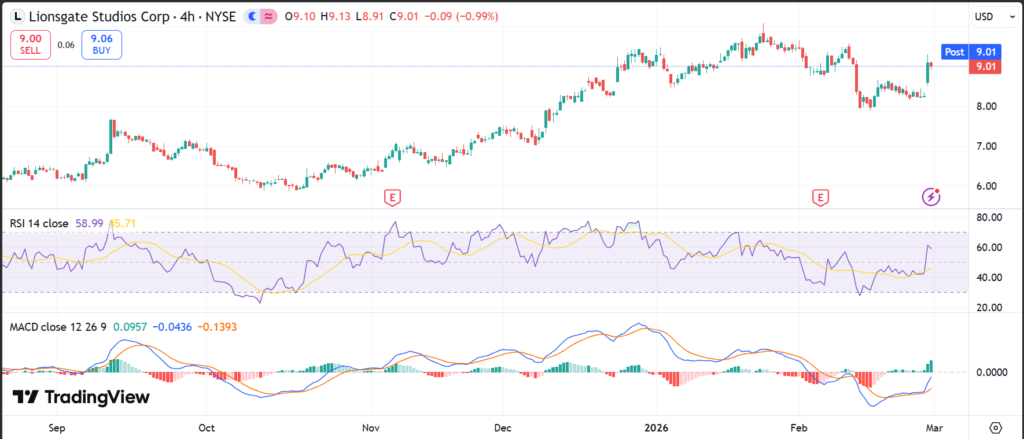
The Relative Strength Index (RSI) for LION is hovering around the mid‑50s, which is neither overbought (above 70) nor oversold (below 30). This means the stock is not stretched to extremes and could move either way depending on news or volume.
The Moving Average Convergence Divergence (MACD) is currently in a mildly positive or neutral zone, indicating a possible short‑term uptrend or a flat consolidation, rather than a strong bearish turn. The 50‑day moving average sits just below the current price, while the 200‑day is slightly above it, so there is no clear golden cross or death cross at the moment.
Trading volume has been moderate, with some spikes around earnings releases and analyst‑rating moves, but not enough to signal a big breakout or panic‑driven sell‑off. For beginners, this suggests that LION is trading in a range‑bound pattern with modest upside bias, not a clear runaway trend.
Analyst ratings & LION price targets
Wall Street analysts currently rate LION stock at roughly a moderate‑buy level, with a mix of buy, hold, and a few sell ratings. One major bank has a “Strong Buy,” while several others lean toward “Buy” or “Outperform,” and a handful sit at “Hold” or “Sell.”
The average 12‑month price target for LION is around $9.86, with the highest estimate near $11.50 and the lowest roughly in the $7.00 area. That implies upside potential of about 15–20% from the latest close of $8.25, but also a meaningful downside tail if the bear‑case narrative wins out.
Several firms, including Morgan Stanley and Barrington Research, have reiterated overweight or outperform stances, citing improved library revenue, franchise strength, and a leaner studio structure. However, a recent downgrade from one boutique firm to “Sell” reflects concern that the valuation may already price in too much optimism if box‑office or streaming growth disappoint.
For investors, this mixed‑but‑leaning‑positive rating picture suggests that professional analysts see LION stock as a moderate‑risk opportunity to grow, but not a no‑brainer trade.
Insider activity
Recent insider activity in LION stock has been relatively light, without any blockbuster, headline‑grabbing transactions. There have been some small purchases and sales by executives and directors, consistent with routine portfolio management rather than a clear signal of panic or extreme confidence.
No major insider has publicly disclosed a block purchase large enough to signal a strong “bottom‑in” conviction, but there also has not been a wave of coordinated selling that would raise red flags. Given that Lionsgate is now a standalone studio after the STARZ separation, insiders may be waiting for a more stable earnings trajectory before making larger bets.
Overall, insider activity leans neutral to mildly positive, neither a clear vote of confidence nor a warning sign.
Valuation analysis
LION trades with a forward P/E ratio near 45–46, which is high relative to many traditional media peers, but more in line with asset‑light, content‑driven studios. The trailing P/E is negative or not meaningful because the company still reports net losses, driven by content‑amortization costs and restructuring.
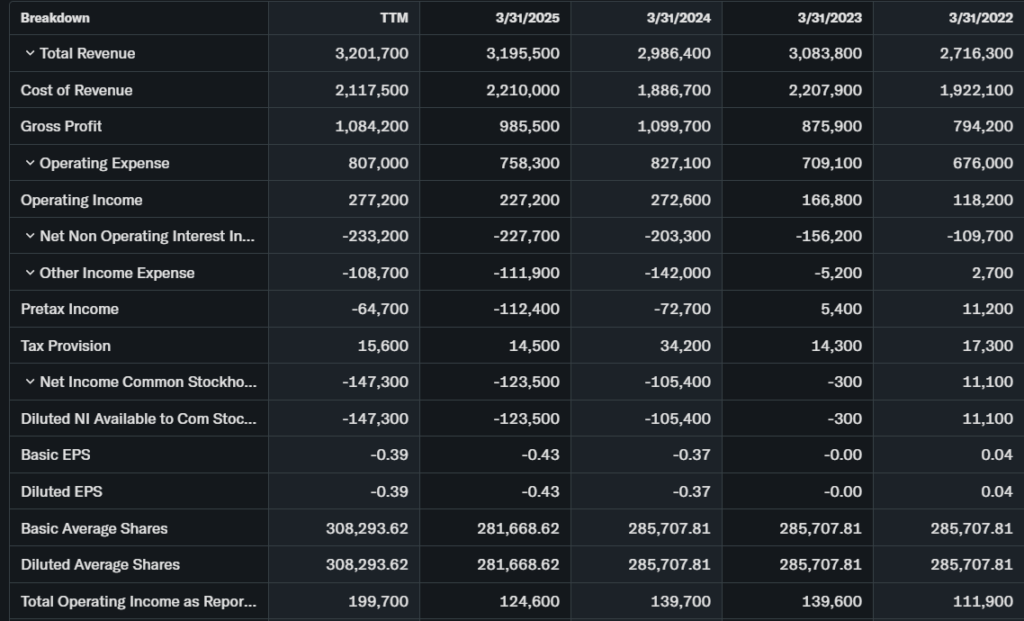
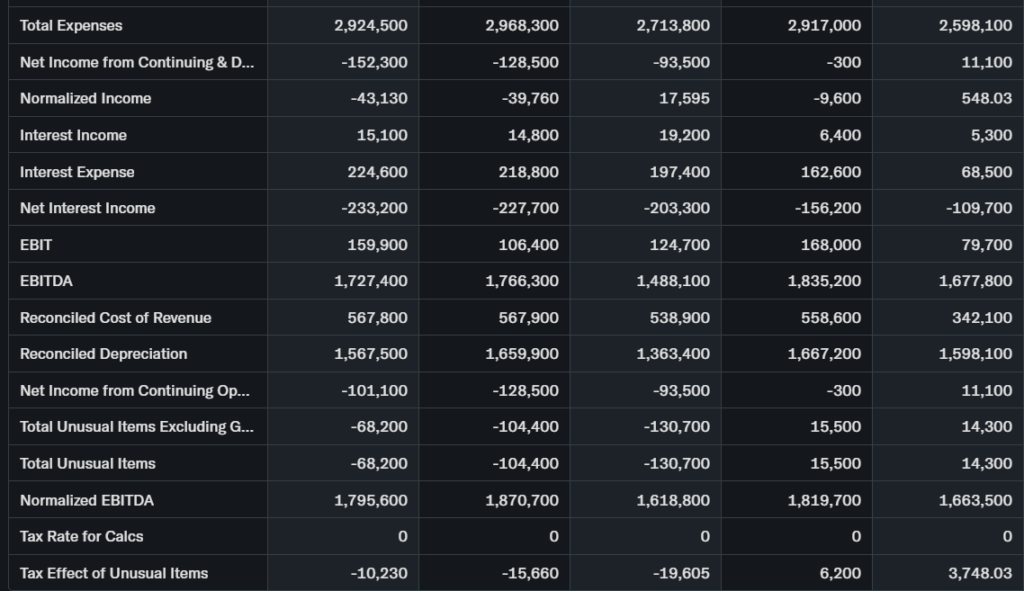
The price‑to‑sales ratio is around 0.7–0.8, which is modest for a studio with a valuable library and global franchises, suggesting that the market is pricing LION more like a cyclical business than a pure growth stock. Revenue over the trailing 12 months sits around $3.9–$4.0 billion, with library revenue alone hitting a record $1.05 billion in the latest quarter.
Earnings per share remain negative, but adjusted OIBDA and adjusted net income show improvement, signaling that core operating performance is healing even as GAAP earnings lag. Free cash flow has been modest but stable, helped by strong library licensing and lower debt‑related pressure compared with earlier years.
Against similar‑sized media or entertainment names, LION looks fairly valued with a modest premium for its franchise‑heavy library and international distribution, but not clearly cheap. The valuation assumes that revenue growth and margin expansion continue; if growth stalls, the stock could be seen as overvalued.
Recent LION earnings & catalysts
In its third quarter of fiscal 2026 (ended December 31, 2025), Lionsgate reported revenue of about $724 million, above the prior‑year quarter and in line with or slightly above expectations. Operating income was around $36 million, while net loss was $46 million, or $0.16 per share, reflecting content‑related costs and ongoing restructuring.
The headline number investors latched onto was trailing 12‑month library revenue of $1.05 billion, up about 10% year‑over‑year, the highest level in company history. That helped drive the recent lift in LION stock price, as investors see the library as a recurring, high‑margin source of cash.
Major catalysts ahead include:
New film and TV releases built on established franchises.
Further integration of the post‑STARZ separation structure to reduce costs.
Expanded licensing deals with streaming platforms and international broadcasters.
Strategic hires such as the appointment of former U.S. Treasury Secretary Steven T. Mnuchin to the board, which may signal a focus on capital‑structure discipline and M&A opportunities.
Earnings‑related volatility is likely to continue, with LION stock price reacting sharply to each quarterly report and updates on box‑office performance or streaming deals.
Bullish case
Several realistic growth drivers support a bullish view on LION stock:
Strong franchise library: The Hunger Games, John Wick, Saw, and other brands provide steady licensing and sequel‑based revenue, which can cushion weaker theatrical weekends.
Rising library revenue: With library income now over $1 billion annually, Lionsgate can fund new content and pay down debt without constant studio losses.
Leaner studio structure: After the STARZ separation, the company has fewer overlapping costs and can focus on core film and TV production.
Streaming and licensing tailwinds: Demand for proven IP from global platforms can keep LION’s library sales healthy for years.
If Lionsgate can maintain mid‑single‑digit revenue growth and slowly improve margins, LION stock could trade higher over the next few years, especially if GAAP losses narrow and adjusted profitability strengthens.
Bearish case and risks
On the other side, several risks make LION stock more speculative:
Cyclical box‑office performance: One or two weak films can quickly reverse investor sentiment and drag down the stock.
Competition: Big studios and streaming giants control massive budgets and global distribution, limiting Lionsgate’s pricing power.
Slowing growth or margin pressure: If library revenue growth cools or production costs rise, LION’s improved outlook could fade.
Economic and regulatory headwinds: Higher interest rates, inflation, and changes in streaming or tax rules can hurt margins and licensing demand.
For value‑oriented investors, the ongoing net losses and high forward P/E also raise questions about whether LION stock is fairly priced for its current risk profile.
Market sentiment & investor psychology
Short interest in LION is modest as a percentage of float, neither extreme nor negligible, suggesting that bears are present but not overwhelming. Options activity shows a mix of calls and puts, indicating that traders are hedging both upside and downside around earnings and key releases.
Institutional ownership has shifted somewhat after the STARZ spin‑off, with some large funds trimming positions and newer shareholders entering on the premise of a cheaper, more focused studio. Retail investors are attracted by the popular franchises and the low‑looking share price, which can create momentum swings if sentiment turns sharply.
Overall sentiment for LION stock sits in a neutral‑to‑optimistic range: professionals see potential, but not enough to fully ignore the risks, while retail investors remain intrigued by the brand power.
Short‑term outlook
In the short term, LION stock price is likely to remain range‑bound with possible upside if the next earnings or box‑office update beat expectations. Technicals show the stock hovering near key support and resistance, with the 50‑day and 200‑day moving averages acting as natural focal points.
Any breakout above $9.00 on strong volume could signal a renewed bullish phase, while a drop below $7.80 with rising volume might trigger further profit‑taking. Without clear macro or studio‑specific news, most investors should expect modest swings rather than a sudden spike.
Medium to long‑term outlook
Over the next 6–24 months, LION’s long‑term case hinges on whether it can:
Keep library revenue growing at or above 5–10% per year.
Deliver consistent, franchise‑driven box‑office and TV performance.
Gradually reduce GAAP losses while improving free cash flow.
If it executes, LION stock could re‑rate higher as the market starts to focus more on earnings and cash generation than on past losses. If growth stalls or costs rise, the stock could linger in its current range or drift lower.
For long‑term investors, a watchlist or small‑position approach may be more appropriate than a large, all‑in bet, given the balance of risk and reward.
FAQ:
Is LION stock a buy right now?
LION stock is more of a moderate‑conviction “hold or watch” than a clear “buy” for most conservative investors. The price‑to‑sales is reasonable, but the negative earnings and high forward P/E mean the stock is not cheap. Aggressive growth‑oriented investors may find it attractive as a small, high‑beta position tied to franchise and library growth.
What is the price target for LION stock?
The average 12‑month price target for LION stock is around $9.86, with a high near $11.50 and a low around $7.00. That implies potential upside of roughly 15–20% from the latest close, with meaningful downside risk if the bear case unfolds.
What are major risks for LION stock?
Key risks include weak box‑office performance, slower library‑and‑streaming growth, margin pressure from production costs, and competition from larger studios and streaming giants. Economic slowdowns or regulatory changes in media or streaming markets could also hurt licensing demand and valuations.
Suggestions
Compare with Opendoor stock
See our Microsoft stock forecast
Read our tech sector valuation breakdown
Final balanced conclusion
For many investors, LION stock is currently best viewed as a Hold or Watchlist candidate rather than an outright Buy. The company has strong franchises, a growing library, and improving underlying metrics, but the valuation and earnings profile remain speculative.
If you already own LION, consider holding with discipline and using pullbacks or rallies to rebalance rather than chasing momentum. If you do not own it, a small, measured position sized for its volatility may be more appropriate than a large allocation.
Disclaimer: This article is for informational purposes only and not financial advice.