
AMD stock forecast for 2026 explores price trends, earnings, technical analysis, and analyst targets. Is AMD stock a buy amid AI growth and market volatility? Get insights now.
Introduction
AMD designs high-performance chips for computers, gaming, and data centers. The AMD stock draws attention due to its role in the AI boom. Tech stocks face pressure from U.S.-China trade tensions and economic slowdowns in early 2026.
Investors watch AMD stock closely after recent volatility. Record 2025 revenue set high hopes, but Q1 2026 guidance disappointed. Broader market conditions, like rising interest rates, hit semiconductors hard.
Latest Stock Price & Trend
As of the last market close on March 6, 2026, AMD stock price stands at around $200, down sharply from recent peaks. The stock fell 4.01% in one day on March 3 amid weak guidance.
Over five days, AMD stock price dropped amid tech selling. The one-month trend shows a 21% decline from $253 on January 28. Three-month performance weakened due to competition fears, while six months brought gains from AI hype earlier.
Year-to-date, AMD stock lags with a dip after early optimism. The 52-week high hit near $253, and the low sits lower from prior corrections. This bearish trend signals caution for investors, pointing to potential further pullbacks if support fails.
Technical Analysis
Support levels mark prices where buyers step in, like near the 200-day moving average that AMD stock recently tested. Resistance levels act as ceilings where sellers dominate, around recent highs like $253.
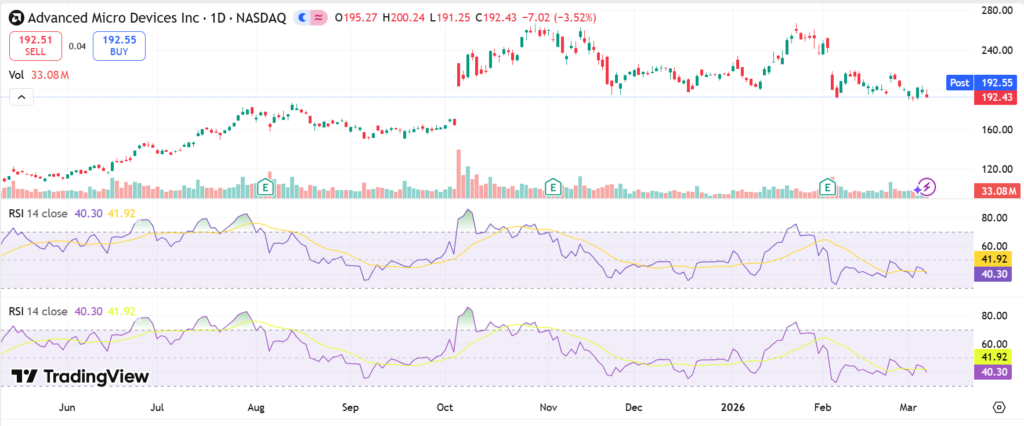
RSI reading, which measures speed of price moves, likely shows oversold conditions below 30 after the drop—hinting at a possible rebound. MACD trend, comparing short and long averages, appears bearish with lines crossing down, signaling weakening momentum.
The 50-day moving average sits above the 200-day, but no golden cross (bullish signal) formed recently. Trading volume spiked on down days, showing strong selling pressure. These indicators warn beginners of short-term risks but watch for reversal signs.
Analyst Ratings & Price Targets
Analysts rate AMD stock with a mix: 35 Buys, 10 Holds, and few Sells from 50 firms. Average price target hits $284, with highs near $300 and lows at $200. Recent upgrades came post-Q4, but downgrades followed Q1 guidance.
Wall Street firms like those at Morningstar see fair value up slightly to $284 on AI growth. This mixed sentiment means investors should weigh growth against risks—positive targets suggest upside if execution improves.
Insider Activity
Recent insider selling outweighs buying, with executives trimming shares post-earnings. No major large buys noted in early 2026 filings. Trends show management cashing in on prior gains amid volatility.
A performance warrant to Meta for up to 160 million shares flags dilution risk. This implies caution rather than strong confidence, as leaders reduce exposure.
Valuation Analysis
Trailing P/E ratio exceeds 100 on softened earnings, while forward P/E drops to around 40 expecting recovery. Price-to-sales sits high at 10x amid AI bets. Revenue grew strong YoY in 2025 but Q1 2026 guidance shows sequential dip.
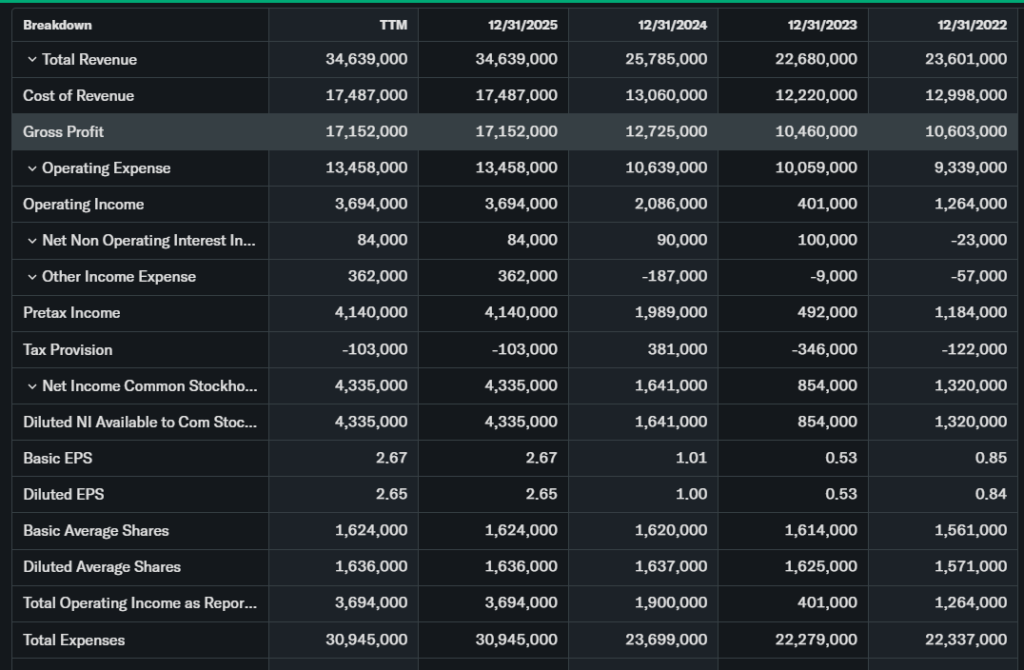
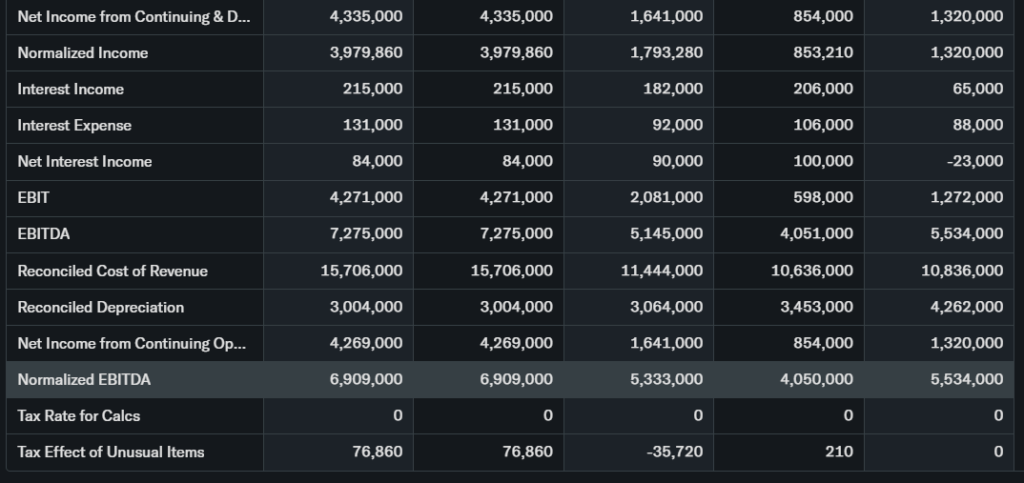
EPS growth slowed recently, with free cash flow solid but pressured by R&D. AMD holds ample cash against moderate debt. Compared to Nvidia, AMD looks cheaper but riskier; versus peers like Intel, it’s premium-valued.
Overall, AMD stock appears fairly valued, not deeply undervalued yet—watch for earnings beats to justify multiples.
Recent Earnings & Catalysts
Q4 2025 earnings beat on record revenue, driven by data center and EPYC CPUs. But Q1 2026 guidance projected sequential revenue drop, missing high expectations and sparking the selloff.
EPS topped forecasts slightly, yet stock fell on forward outlook. Catalysts include Ryzen AI 400 Series launch for PCs and AI GPUs gaining traction. U.S. export curbs to China hurt data center sales. Earnings triggered the March dip, erasing gains.
Bullish Case
AI PC market share grows with Ryzen AI 400 Series, boosting client revenue. Data center EPYC and Instinct GPUs capture share from rivals.
Strong hyperscaler demand and AI infrastructure spend support multi-year growth. Operational efficiencies from prior years aid margins.
Bearish Case
Nvidia dominates AI GPUs, slowing AMD’s ramp. Export restrictions cut China sales, a key market.
Customer in-housing like Microsoft’s Maia chip shrinks opportunities. Margin pressures from HBM memory shortages loom. Geopolitical risks add uncertainty.
Market Sentiment & Investor Psychology
Short interest rose to 5-7% of float, showing bearish bets. Options favor puts over calls lately, reflecting caution.
Institutions hold steady but trimmed post-guidance. Retail chases momentum but now fearful after drops. Sentiment leans neutral to pessimistic amid macro fears.
Short-Term Outlook
Technical oversold RSI and volume exhaustion suggest bounce potential near 200-day MA. Momentum stays weak without positive news.
Watch volume for reversal; expect sideways chop or mild rebound barring fresh negatives.
Medium to Long-Term Outlook
AMD’s business thrives on AI chips and EPYC strength in growing data centers. Competitive moat builds via open-source software and cost edges.
Financials stay healthy with cash buffers. Long-term investors should hold or accumulate on dips, given industry tailwinds outweigh near-term risks.
FAQ Section
Is AMD stock a buy right now?
Not outright—hold for now amid volatility; buy on confirmed support.
What is the price target for AMD stock?
Average at $284, with 2026 forecasts eyeing $250-$300 range.
What are major risks for AMD stock?
Competition from Nvidia, export bans, and dilution from warrants.
What is AMD stock forecast for 2026?
Moderate growth if AI ramps; potential 20-40% upside long-term.
When are AMD earnings next?
Q1 2026 results expected late April, per typical schedule.
Suggestions
- Compare with Opendoor stock analysis
- See our semiconductor sector forecast
- Read Nvidia vs AMD technical breakdown
Final Balanced Conclusion
Hold for current AMD stock holders; add to watchlist for dips. Growth in AI justifies patience, but near-term risks like guidance and competition warrant caution. Strong fundamentals support recovery over time.
Disclaimer: This article is for informational purposes only and not financial advice.